

Localization remains a key factor in global growth for companies of all sizes. In a survey of 100 decision-makers, 92 percent said localization will play a bigger role in business strategy over the next three to five years. Leaders also said localization directly boosts revenue (46 percent) and improves customer satisfaction (42 percent).
Teams are also feeling the pressure from growing demand. Balancing quality, cost, and speed remains tough, so leaders are seeking ways to scale efficiently without sacrificing results.
The survey highlighted key priorities, how teams are using AI, and practical steps localization teams can take in 2026.
What leaders value most in localization providers
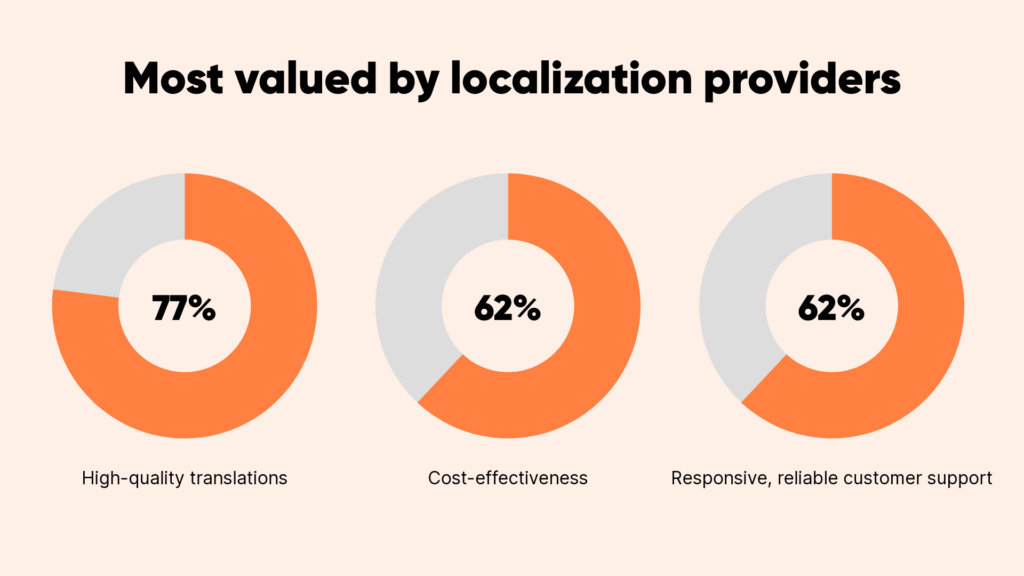
When asked about the most important qualities in a localization partner, three stood out:
- High-quality translations (77 percent)
- Cost-effectiveness (62 percent)
- Responsive, reliable customer support (62 percent)
Looking forward, leaders plan to invest mainly in improving translation quality (47 percent) and adding more language options (26 percent).
This shows that localization leaders have two main goals. They want partners who deliver great quality now and can also support growth in new languages and markets. High-quality translations remain a top priority, but many leaders feel there is a gap between what they need and what they get.
For example: A company moving into Southeast Asia may need marketing campaigns translated into several languages. If a vendor provides uneven quality, it can hurt the brand. At the same time, quickly scaling content needs cost-effective solutions that maintain high accuracy.
How leaders view AI in translation
AI, such as machine translation and large language models, is getting a lot of attention. Ninety-seven percent of respondents are comfortable with AI taking on more of the translation work in the future because it lowers costs and speeds up time to market.
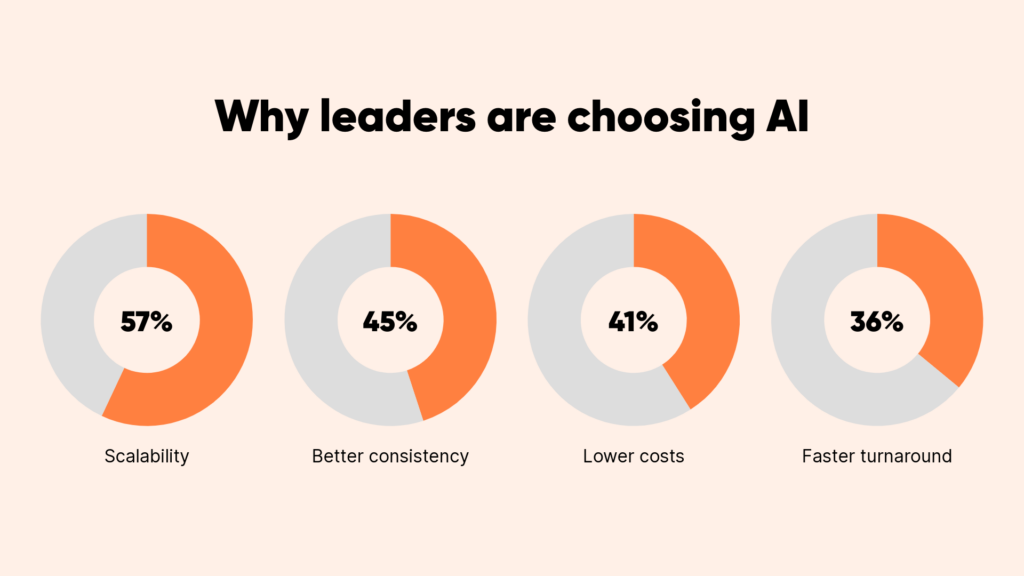
Leaders are choosing AI for practical reasons, not just because it is popular. They want benefits like:
- Scalability (57 percent)
- Better consistency (45 percent)
- Lower costs (41 percent)
- Faster turnaround (36 percent)
For example: A localization team working on a quarterly product launch might need to translate hundreds of pages. AI can quickly produce first drafts, while human reviewers focus on the most important or complex content to ensure both speed and quality are met.
Leaders view AI as a way to reach their goals, not as the goal itself. Using modular approaches, such as adding AI for quality checks or faster file processing, helps teams scale without being locked into a single system. Teams can start small, show results, and grow over time.
The top obstacles to global growth
Survey respondents identified three main challenges to scaling globally: cost, quality, and turnaround speed.
1. Cost pressures
Localization budgets are limited, and many teams work with several vendors. In the survey, 28 percent said managing costs is their biggest challenge. Leaders focus on cost-effectiveness by consolidating vendors or automating processes.
For example: Putting all localization work with one vendor can cut down on admin work and make communication easier. Using AI for repetitive translation tasks can lower costs without hurting quality. Even saving 5 to 15 percent can make switching vendors worthwhile.
2. Maintaining quality at scale
Quality is crucial. Translation mistakes can confuse customers, damage the brand, or even lead to legal or compliance issues. Still, 20 percent of respondents said quality is their main challenge, and 47 percent plan to invest in improving it.
For example: A company creating marketing materials, user guides, and support documents might use a tiered approach. Marketing content gets a thorough human review, while internal documents are handled with AI-assisted workflows. Automated quality tools can spot errors, so teams can focus human effort where it counts most.
3. Speed and turnaround
Fast delivery is key for global growth. Companies that release localized content quickly can meet demand better. Thirty-six percent of leaders said turnaround time is a main reason for adopting AI.
For example: Using AI-assisted translation with post-editing can cut project turnaround from weeks to days. Automating tasks like file prep, glossary updates, or multimedia localization also helps teams meet deadlines and keep accuracy high.
Key takeaways for localization teams in 2026
- Focus on results, not just tools: Invest in AI when it clearly improves speed, consistency, or saves money.
- Be strategic about quality: Use tiered workflows so the most important content gets the most attention.
- Make vendor management simpler: Consolidate vendors and automate repetitive tasks to cut hidden costs and let teams focus on high-value work.
- Plan for growth: Build modular systems that let your team expand quickly without sacrificing quality.
Localization is now a key driver of growth, not just a support function. Companies that use AI wisely, maintain high quality, and streamline their processes will be better prepared to enter new markets and deliver a consistent experience to global customers.